Pursuing an academic career can be challenging, frustrating, and stressful… especially for young researchers. The pressure to publish, the competitive environment, and the constant push for productivity mean that not every day is a good one. And for neurodivergent researchers like me, the challenges can be even more intense, since we do not only need to cope with objective difficulties, but also with the need to “behave in a socially acceptable manner” and continuously masking our feelings and most of our needs. So, strategies are necessary to cope with stress, anxiety, and the persistent feeling of not being enough.
All starts improving when you are available to admit that… some days are just bad days.
And even on good days, having a “release button” is essential.
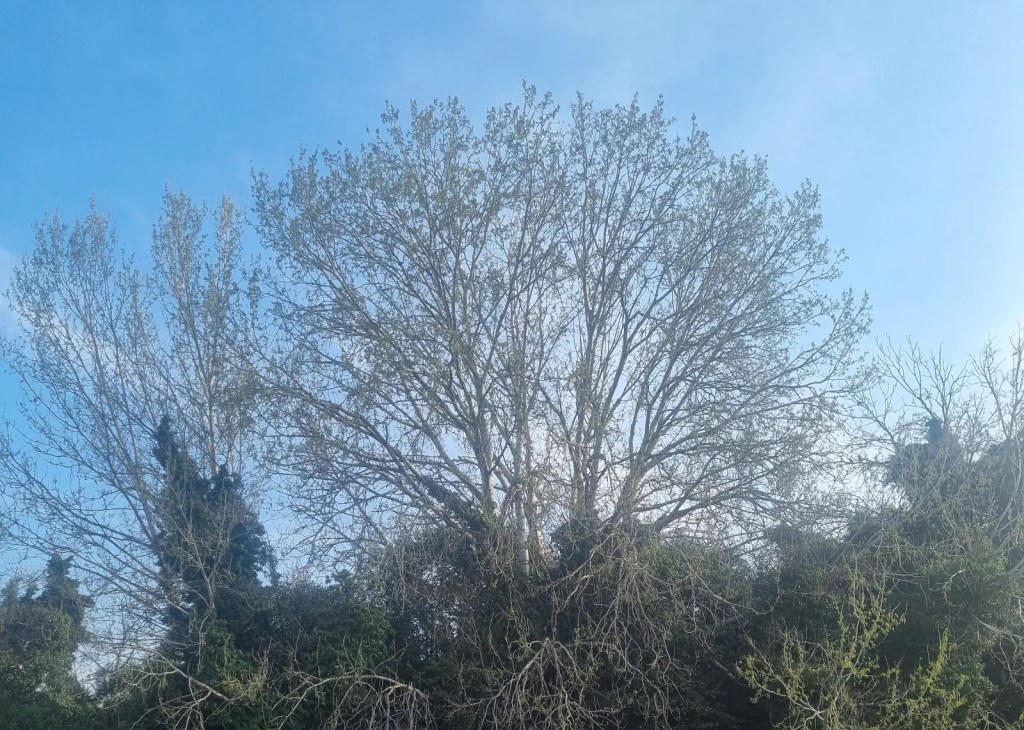
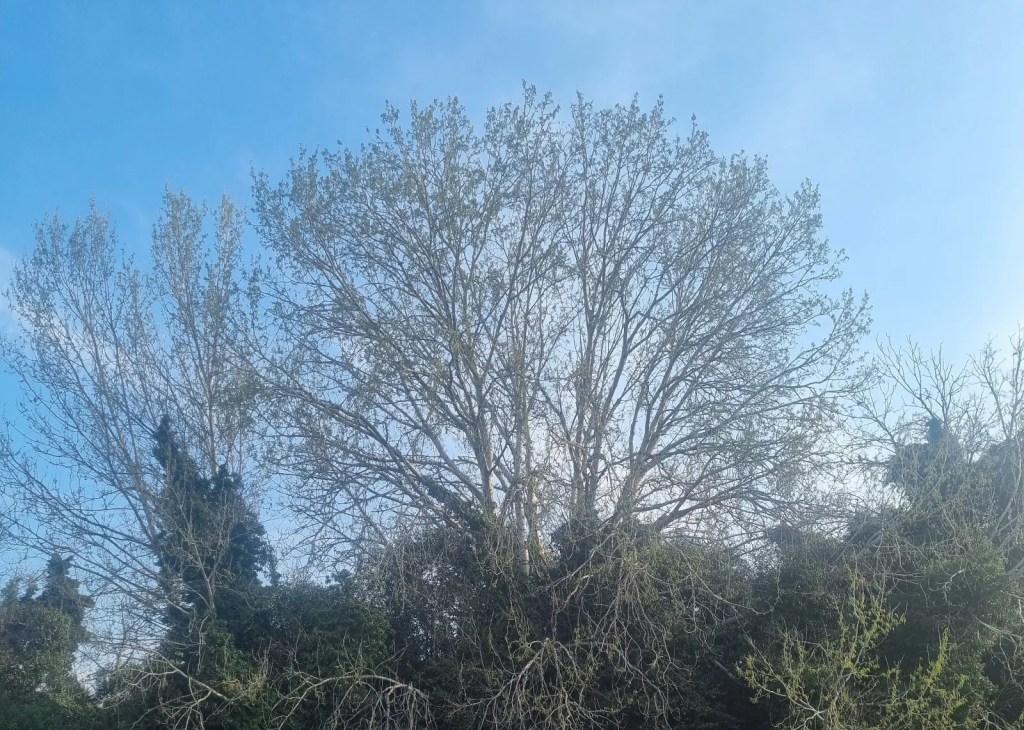
For me, the release button I often hit is a tree just outside my lab window. Its branches, gently swaying, offer a sense of calm, especially when I take a few minutes with a cup of coffee, stepping out into the backyard of the campus.
I know, caffeine definitely plays an important role in sweeping away my bad feelings. But the point here is that watching tree branches has always been relaxing. And I’m not just talking about myself: ask anyone, and they’ll confirm that they feel more relaxed in natural settings. Plenty of research shows that natural elements have a restorative effect on us humans. Just explore studies on biophilia, the Attention Restoration Theory (ART) by Rachel and Stephen Kaplan, and the concept of Green Prescriptions to get an idea.
Among these topics I’m interested in, my tendency to think in patterns and analyze details, as if arranging them on a mental blackboard, led me, in particular, to explore the work of physicist Richard Taylor. And suddenly, I saw trees, including that university campus tree, in a whole new way.
Taylor’s research explores fractals, the intricate, self-repeating patterns found throughout Nature in trees, clouds, rivers, coastlines, and even in our own blood vessels. His works and other authors’ studies reveal something fascinating: viewing fractals has a measurable positive effect on the human brain. Using eye-tracking technology and physiological measurements, it has been found that when people observe fractal patterns within a specific complexity range (specifically, a fractal dimension of 1.3 to 1.5), their brains respond with increased relaxation and reduced stress. This effect, known as fractal fluency, suggests that our visual system is attuned to recognize and process these patterns efficiently, making them naturally soothing. Tree fractal structures, thus, resonate with the way our brains process visual information, triggering neural pathways associated with relaxation. In fact, Taylor’s findings align with broader research on the benefits of Nature exposure, reinforcing why environments rich in organic, fractal-like patterns can be so therapeutic.
This might explain why gazing at tree branches feels so restorative – regardless of how bad was your day and how much coffee you have available to grab. For me, discovering Taylor’s research transformed how I see the tree outside my window. It’s not just a comforting presence anymore; it’s a natural masterpiece of fractal complexity, offering my brain exactly the kind of patterns it craves for relaxation. What was once a simple escape from academic stress has now become something even more meaningful: an interaction with a fundamental structure of Nature, that science proves is deeply connected to our well-being.
So, from today, if you see fractals in clouds, trees, rivers, stones… notice how happy you can be thanks to them, and let the bad feeling go away.
 Talking Ecology