
A few days ago, I was walking with my family in a park, that was created along the old riverbed of the Sile-Piave river by converting some patches of agricultural land into a green area integrated into the urban fabric of Jesolo – a coastal city in northern Italy. The park now connects the city’s historic center with a semi-natural place, where typical “park trees” coexist with the lush reed beds of the riverbank, where many animals find refuge, as it is especially evident in the early morning due to their songs and rustling.
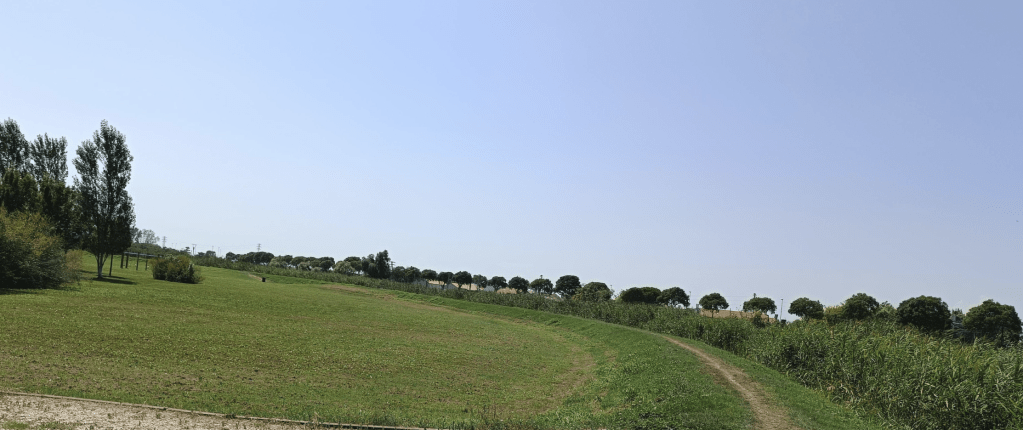
The park and the river embankments are particularly frequented by waterfowl, not only because of the nearby river but also because the park features two artificial ponds. Both were created during the park’s construction, but they are very different from each other. Although I had always noticed differences in terms of surface area and water levels, that day, while we were playing and chatting, my son pointed out a peculiar characteristic of the smaller pond. And he did it with in its own playful way: “Mom, look, I want to pick one of those hot dogs on a stick!”
The “hot dogs on a stick” he was referring to were actually the cylindrical, brownish seed heads on the stems of Typha angustifolia. This is a plant typical of riparian vegetation, widespread in Italian plains along rivers and freshwater basins… or rather, a plant that used to be widespread. Indeed, that funny remark reminded me that, in the past, there were many cattail plants in rural areas.
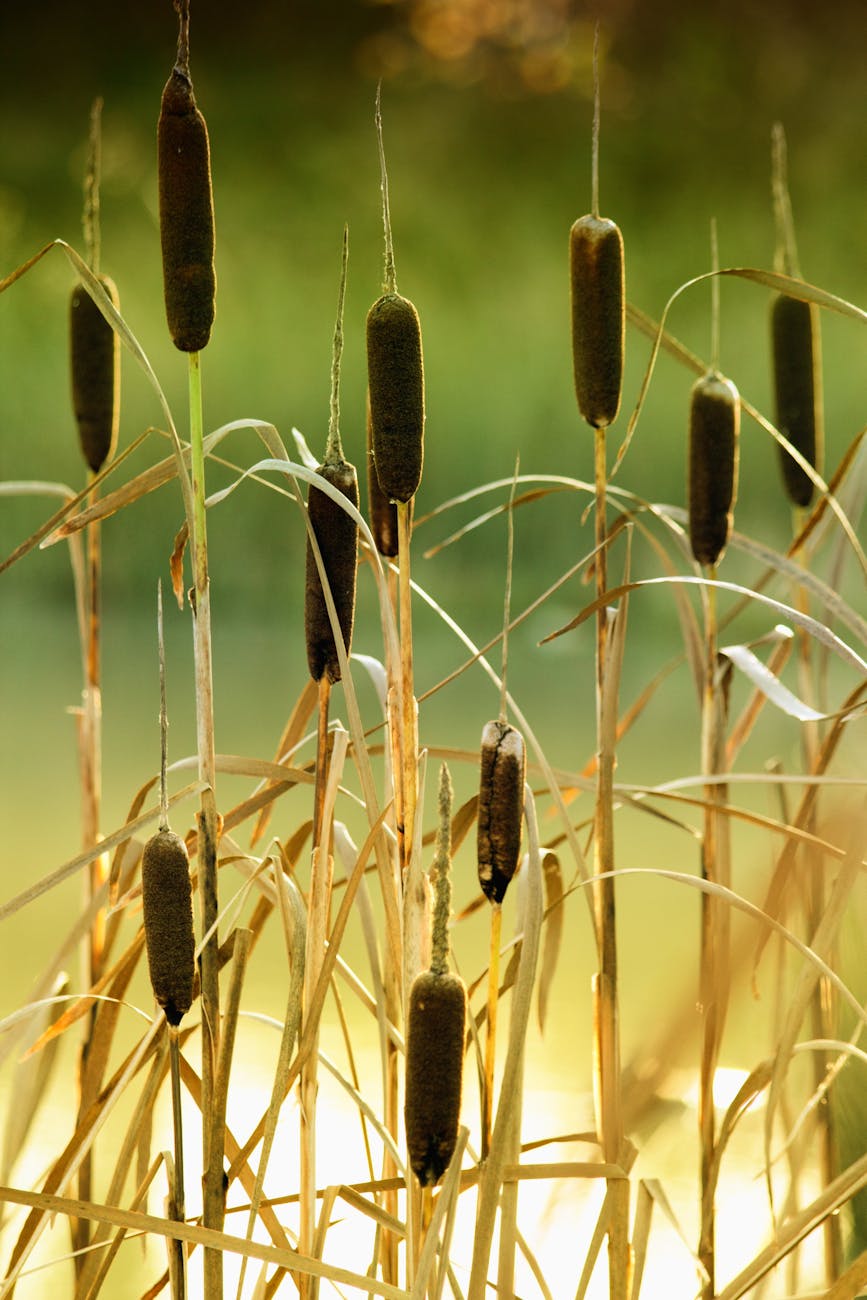
The ditches and irrigation canals near where I used to live were full of those plants. In fact, some of my grandmother’s friends used to collect the seed heads, before they burst into fluffy seeds, and carefully arrange them in tall, transparent vases in their living rooms, often alongside peacock tail feathers. It was definitely a decoration style of the 1980s, but the memory of those vases made me realize that, if I only was driven by a strange form of nostalgia and wanted to recreate the same decoration today, I would struggle to do so. Those same rural areas no longer have those plants, or at least they are not as frequent and abundant as they used to be. The reasons for this change are likely the use of herbicides, the mowing of ditches, the intensive mechanization of most farming techniques, and all the unavoidable consequences and feedback effects these interventions have on agricultural systems and the soil ecosystem.
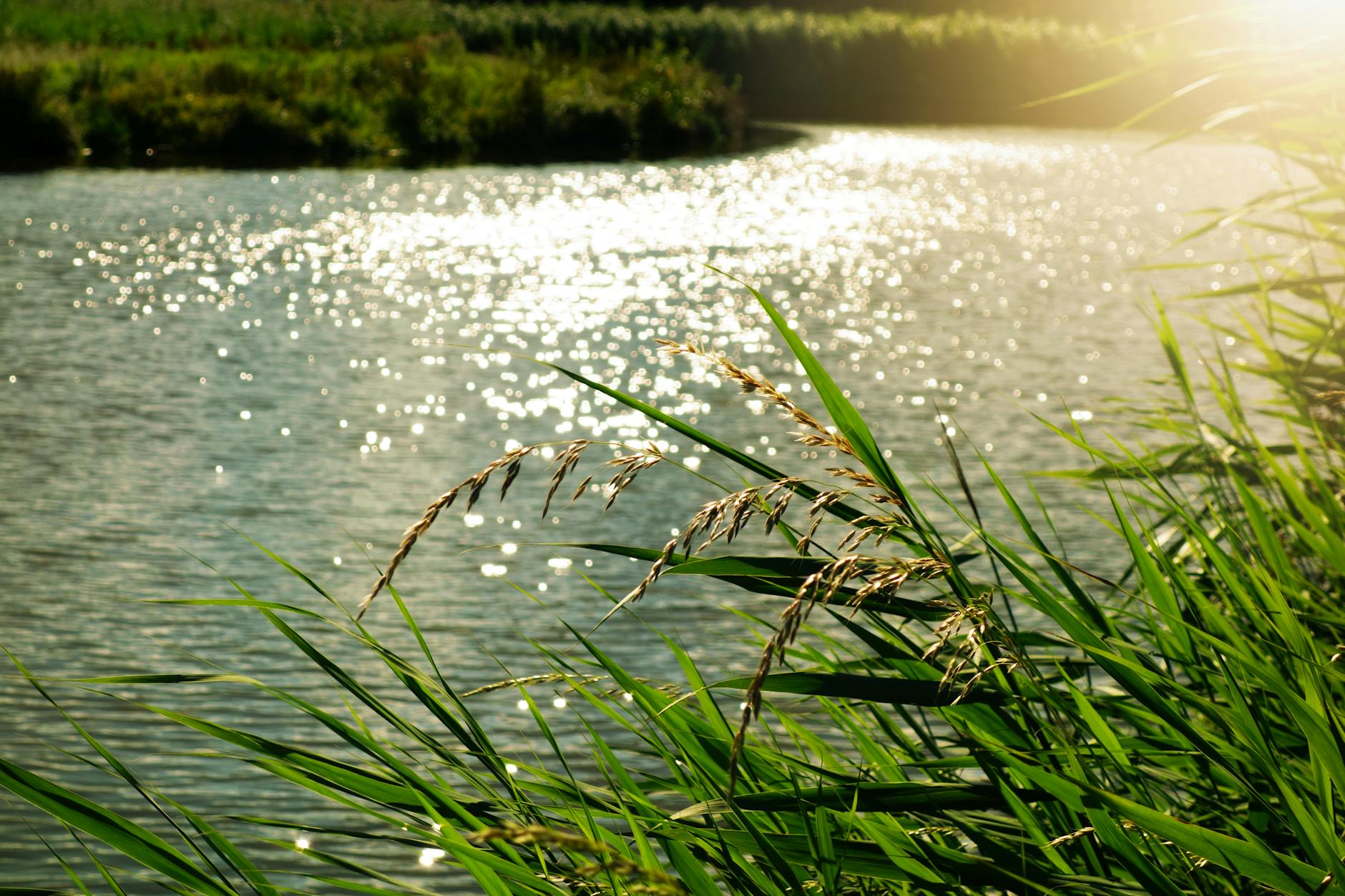
While one part of my brain was trying to build a valid explanation for why it would be better to leave what my son had called “hot dogs ” there, rather than pick them indiscriminately, the other part of my “ecologist’s brain” was already processing in the background. The disappearance of those plants leads to the absence of many things: it’s not just about not having shabby-chic decorations anymore, but also the fact that those plants served as nurseries for amphibians, reptiles, fish, and small birds. Of course, there’s still Phragmites australis, the common reed, which actually colonizes the other pond in the park. Phragmites plants do not have a funny “hot dog”, but a feather-like flowering, as my little boy noticed when observing that, while the first, shallower lake is surrounded by cattail, the other is definitely dominated by common reed, just like along the embankments levee of the river.
Needless to say, I immediately saw it as a case study. Thus, in the following days, I started searching for information about the park and its lakes. I soon discovered that the two ponds in the park were indeed created in the same place and at the same time, but as some locals tell me, it seems that they are fed by different sources. One receives some water from the Sile River, while the other collects rainwater and is connected to an isolated aquifer.
I did mention that Jesolo is a coastal city, right? Well, one of the factors that most affects its rivers is the intrusion of saltwater from the sea, the so-called salt wedge. The Sile River is not exempt from this phenomenon, which sometimes affects many kilometers of its final stretch; in summer, the water pushes all the way to the pond, influencing its level and salinity. In turn, this is the factor that most likely affects the selection of vegetation. Indeed, cattail does not tolerate salinity well, unlike Phragmites reed, which abundantly colonizes the pond connected to the river that is also influenced by the saltwater intrusion. The other pond, on the other hand, has consistently fresher water, and Typha must have managed to colonize it before the more resilient and invasive common reed could take over.
Once again, ecology was talking to us… just not with words, but with the stems of plants.
 Talking Ecology