Lately, I’ve been enjoying a truly enlightening book: “An Immense World” by Ed Yong. With his masterful prose, Yong, perhaps one of the best science communicators of our time, explores the incredible diversity of animal senses and the richness of the world when viewed through the lens of these varied sensory abilities. This book has piqued my curiosity and led me to reflect on the concept of the ecological niche.
An ecological niche, according to some, is the role or “job” a species performs within its environment. However, this definition can be overly simplistic. The niche concept also encompasses the environment where the species operates. This isn’t surprising—if you consider a person’s job, saying someone is a pilot implies involvement with a motorized vehicle. Specifying that they are an airplane pilot not only identifies their role but also the environment they navigate.
Thus, a niche can be viewed as the full set of physical conditions within an environment that a species inhabits. For instance, let’s visualize a coastal wetland: brackish water of varying depths, a salinity gradient, sediment types differing in particle size, and various invertebrates. In this habitat, a flamingo, which filters water by immersing its neck into deeper waters, finds its niche in brackish conditions where the sediment is silt and fine-grained. Conversely, an avocet prefers shallower waters at the intertidal zone, where the depth suits its legs and its beak can access small benthic invertebrates.
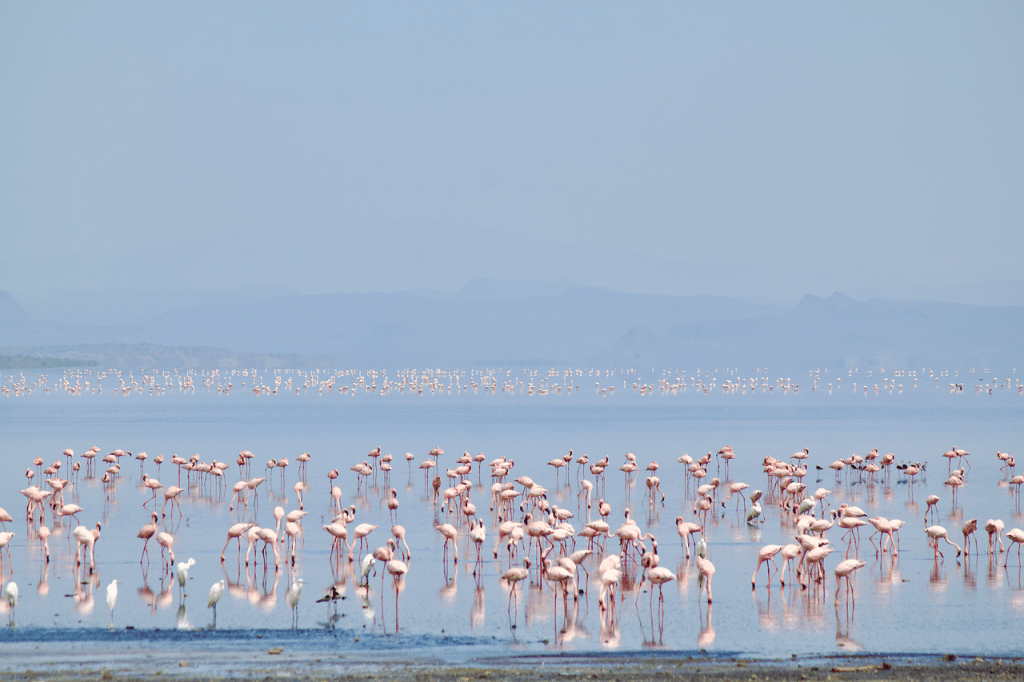
I’ve learned that the most comprehensive definition of a niche includes the range of physical and biological conditions ideal for an organism’s survival and well-being in a particular habitat. In simpler terms, it’s the set of conditions that allow an organism to thrive. Numerous studies have shown that specific conditions, combined with food availability, can predict the presence of certain species.
However, this understanding has its limits. Conversations with more experienced colleagues have revealed that while the ecological niche is a foundational concept in ecology, it can sometimes be elusive. Organisms are often found thriving outside their “comfort zones.” For example, carnivores can adapt to stressful conditions by switching prey or adjusting their physiology, even when the environment seemingly lacks a suitable niche.
Adding complexity to this picture, Yong’s book made me realize that the variables we consider are limited to those detectable by our senses and instruments. Yet, many other factors belonging to the sensorial world of a living being, that is its Umwelt, might play a role.
This concept of Umwelt, introduced by biologist Jakob von Uexküll, refers to the “self-world”, or the subjective reality, each organism experiences – based on its sensory perceptions and cognitive abilities. In essence, it’s the unique way each species perceives and interacts with the world.
While Umwelt and ecological niche are distinct concepts, they still overlap in significant ways. The Umwelt shapes how an organism interacts with its environment, if and how it focuses on certain stimuli or not, thereby influencing the factors that delineate its ecological niche. For instance, the sensory world of a predator determines how it hunts, what it preys on, and where it can survive: all key aspects of its niche. Conversely, the conditions and resources available in a niche can influence the evolution of an organism’s sensory capabilities, thereby shaping its Umwelt.
However, they differ fundamentally in their perspectives. The Umwelt is inherently subjective and species-specific, focusing on the internal experience of the organism. The ecological niche is an external, objective framework used by ecologists to describe and predict species distributions and interactions within ecosystems.
Yet, some example where the dynamic nature of the Umwelt and the structured context of the ecological niche overlap makes me question whether our current niche definitions are missing something. For example, as reported by Yong, the giant squid’s niche includes not just depth, salinity, and temperature, but also the bioluminescence of the krill.
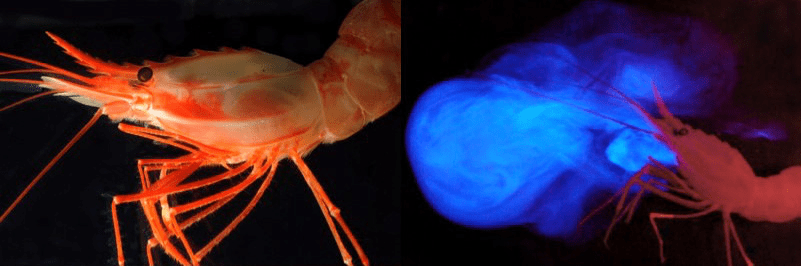
The squid’s enormous eyes, a rarity in the deep sea, are adapted to detect the faint glow of disturbed krill – thus, a signal from its Umwelt. Then, the presence of such bioluminescent light influence the niche of the squid: a glow from the krill is signaling the approach of predatory sperm whales, allowing the squid to escape – definitely something belonging to the niche.
So this concept of Umwelt, though different from an ecological niche, suggests that niches, assumed to be objective and quantifiable, might be more complex.
Given our advanced tools and devices that can measure previously undetectable parameters, is it time to rethink our approach?
 Talking Ecology