One, typically, is considered a small quantity.
One more or one less doesn’t seem to make much of a difference, it seems. However, there are moments when life vividly explains that even just one counts.
For example, one person can make the difference. For better, or sometimes for worse. And one morning, amidst a flurry of concerns triggered by the disrespectful behavior of a relative, spotting one fox, now dead, on the side of the road, made me feel even more disheartened.
Contemplating the likelihood that it met its end due to a car collision during the night, and perished alone on a road boldly cutting through its habitat, only intensified my sense of worry and desolation. It’s not merely about sympathizing with the unfortunate animal that succumbed to indifference. It’s about confronting the apathy of others, witnessing fast-paced machinery heedless of the life struggling to persist, a solitary creature endeavoring to navigate its existence.
It was just one, pnly one fox. “Its atoms will be recycled”, my Chemistry Professor would have said back in high school. I know that: I am an ecologist. But still… I couldn’t help but think that just one counted when it was alive.
I reflected on how the discourse surrounding ecosystem and nature preservation often emphasizes “species conservation” primarily focusing on the role of the species rather than on the individual living beings that comprise the abstract and artificial concept of a species. Regardless of the quantity of organisms, it’s the idea of the species, the collective entity, that holds significance. This approach is practical, grounded in the logical argument that conserving ecosystems is imperative, if for nothing else, because the loss of species or ecosystems could lead to the depletion of crucial functions and ecosystem services essential for human well-being.
However, there are concerns among some scholars (myself included) that focusing solely on this utilitarian perspective might overshadow the fundamental principle of respecting and preserving ecosystems — the inherent right to survive and determine their own life trajectory, which all living beings should possess.
To date, numerous ethicists and environmentalists have explored this topic, with ecologists and ecopsychologists echoing their sentiments and presenting new evidence about the interconnectedness between humans and Nature. Despite recent advancements in environmental awareness and ecological sciences, as well as the growing recognition of the inherent value of natural ecosystems for human mental health, vast uncharted territory remains, with ample work still to be undertaken.
This is particularly evident because we often keep perceiving a species merely as a category, a mere entry in a dataset, an item on a list used for calculating ecological indicators.
I’m not one to groan and whine, but this morning, I found myself in tears. For a fleeting moment, I entertained the thought that some things would never change, and all I could do was tolerate them. But then, something remarkable happened.
It was there: just one tree. One solitary tree, standing amidst an unlikely spot between the sidewalk and the road, yet alive and thriving more than ever.
In that moment, a profound realization washed over me: the urgency of telling everyone that conserving ecosystems arises from the intricate, interconnected web of life that envelops us. It’s a web we did not weave, yet one that both nurtures and sustains us in myriad ways. Our very existence hinges on our ability to uphold the threads of this complex tapestry, even if we cannot always see it. Every entity, no matter how seemingly insignificant, contributes to the fabric of existence.
This is why even just one counts.
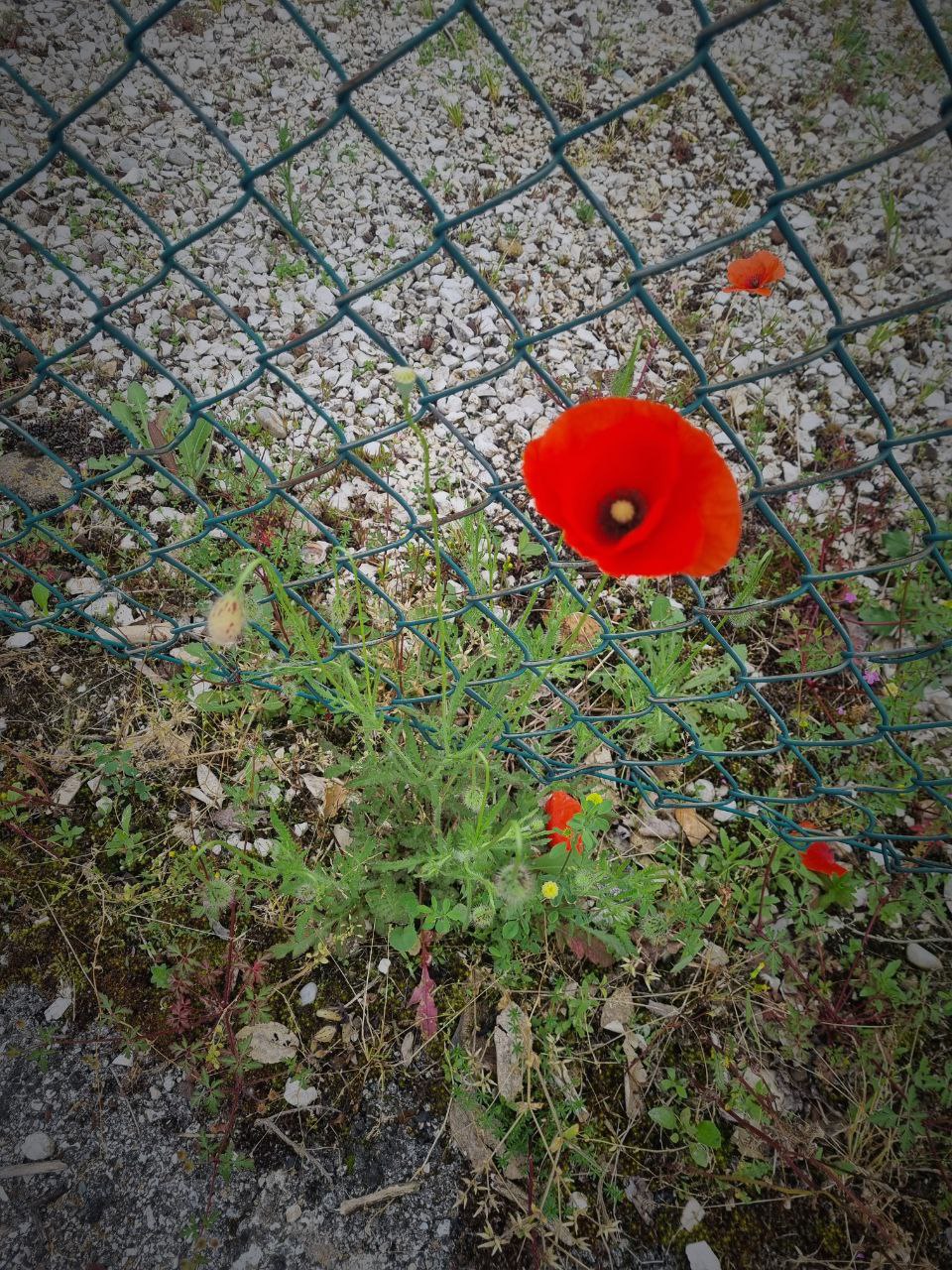
From a violet sprouting amidst pavement cracks to a beautiful red poppy piercing through rocky parking lots, these seemingly inconsequential organisms are integral threads in a larger system. While we may not fully comprehend the extent of their significance, for someone, somewhere, they could be the difference between a day of despair and a day of resilience—a day where the fight for existence and thriving rights is reclaimed.
In preserving ecosystems, we reaffirm our commitment not only to the environment but also to the collective survival and flourishing of all life forms. It’s a call to action rooted in empathy, responsibility, and a profound recognition of our interconnectedness.
Each conservation effort, regardless of size, serves as a knot in the intricate web of life, ensuring its resilience and simultaneously the resilience of the inhabitants of this Earth. One at a time.
 Talking Ecology