
Some days ago, I went for a walk with my dog along our favorite trail in the countryside. In silence, we passed between two plots of cultivated land, and then we followed the path on its curve on the right, which leads into a vineyard.
My dog is rather playful and, I must say, a little bit silly at times. Yet, on that day, that playful dog who was happily trotting on the grass suddenly became hyper-focused. She started walking slowly, her tail no longer wagging but held still halfway up. She began staring at a specific point within the vineyards, and she stayed like that for a good minute, during which the only movements were the imperceptible work of her nostrils and the shifting of weight forward to assume, probably for the first time in her life, a pointing stance, with one front paw slightly lifted and all the others tensed.
I stayed silent – also because, to be honest, I had perceived absolutely nothing myself. And suddenly, a fox jumped out and start escaping far from us, while my dog barked once with a very loud voice – so fast that I could not say if it was the fox jump to cause the reaction in my dog, or the other way around.
Now, believe me: my dog is not at all a wild and fierce dog, or a particularly fearless one. Not that she’s a scaredy-cat, on the contrary: she’s a search-and-rescue dog and is truly formidable, so in her own way, she leads an adventurous life. It’s just that… let’s say, she’s equally comfortable in her cozy bed at home with us, with my children scratching her belly and cuddling her.
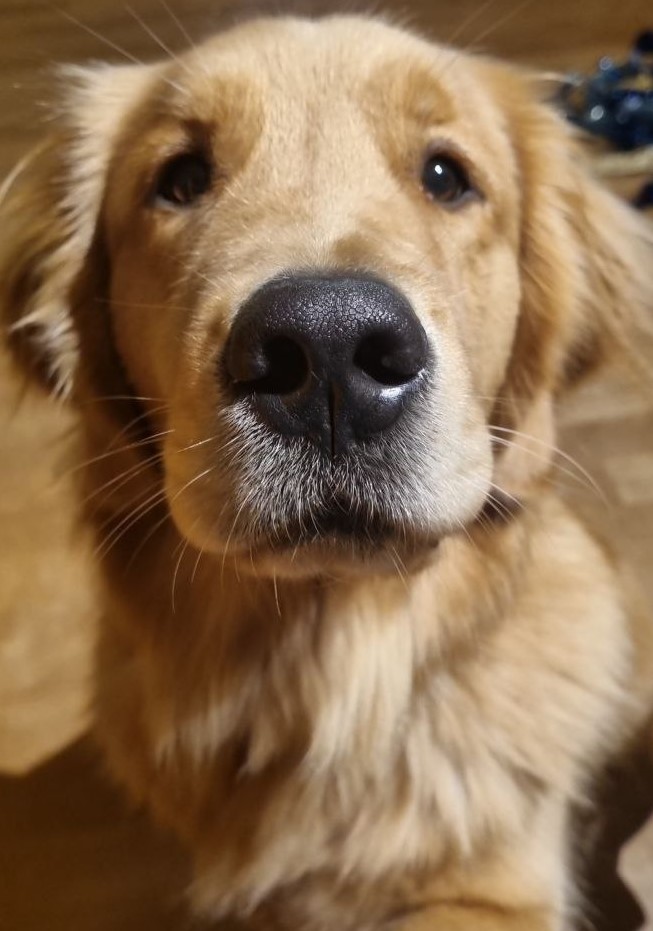
She is so calm that you would easily forget that in her DNA there are the genes of the wild hunting dogs of the past. And to go even further back in time, some of her genes could be directly descended from ancient wolves.
Yet, that moment at the edge of the vineyard made me realize that dogs, despite having undergone an evolution shaped by myriad events of selection and adaptation, descend from a common ancestor to today’s wolf. And no matter how much their genome may have changed; facing an ancestral hunting situation or something interpretable as a threat, it’s possible that instincts and genetic memories took over, causing even the mildest dog to exhibit behaviors that, at least until some point in dog’s phylogenetic tree, characterized the species.
What continues to surprise me is that in our past, there must have been at least one magical moment when some “sort of wolf” encountered a “sort of human”, and an alliance was forged. And I am not alone in this fascination: the history of dog domestication has been extensively studied, yet several details still remain shrouded in mystery.
For example, some genetic and paleontological evidence points to multiple domestication events, in different regions and different times (see for example this work by Larson and Bradley, 2014). If that wasn’t enough to add complexity to the story, some researchers discovered clues indicating episodes of admixture between wolves and dogs after the clades separation, with repeated genetic exchange between dog and wolf along their evolutionary history.
The exact reasons for the domestication of dogs are not entirely clear, but there are several theories. One delves into the hypothesis that humans had food leftovers that could be scavenged by wild animals, thus reinforcing the idea of the wolf as a carnivore that both hunted and scavenged. Perhaps wolves leaned that where there was a human scent, there was often food available as well.
Other researchers proposed the idea of “self-domestication,” suggesting that wolves with less aggressive and more social behavior began to range around the human camps, and ended to be accepted within the group. Once domesticated, some lineages of ancient dogs were selectively bred to enhance various traits suited for specific roles, such as companionship, hunting, herding, and guarding, resulting to the vast diversity of dog breeds we see today. However, despite the various clues, we still lack truly clear answers.
Personally, I believe that to put all the pieces in place, we must consider not only the behavioral aspects as the reasons for an emergent alliace, but also incorporate some ecological concepts to achieve a complete picture.
For instance, the hypothesis that ancient dogs were the human leftover scavengers would presuppose that humans had leftovers, yet it is very uncertain if this was the case, even during the Neolithic period. Additionally, humans themselves could have been a prey, for wolves.
Therefore, we can shift the perspective and consider the possibility that the scavengers were our ancestors, who perhaps started to acquire and process ungulate carcasses (for more information, see the papers by Speth, 1989; Ferraro et al., 2013; and Thompson et al., 2019).
But this still doesn’t disclose how the ancestors of dogs and humans not only met but also began to like each other.
Now, I am just an ecologist making hypothesis and speculations in my spare time, but I can’t help but wonder if there wasn’t an involvement of a niche overlap to trigger those moments when wolves and humans interacted.
If we consider that both wolves and humans likely alternated hunting and scavenging, it would make sense to entertain of both species being present in the same hunting area, predating on the same preys due to a partial niche overlap.
In these situations, a mutual benefit might have occurred: some humans may have observed that wolf packs were very efficient in locating preys – just as my dog noticed the fox’s presence long before me. Conversely, some wolves could have developed a tolerance for humans, that showed their ability to manipulate tools and carcasses, as well as employing tricks and weapons to target the preys that might have eluded the wolves’ fangs.
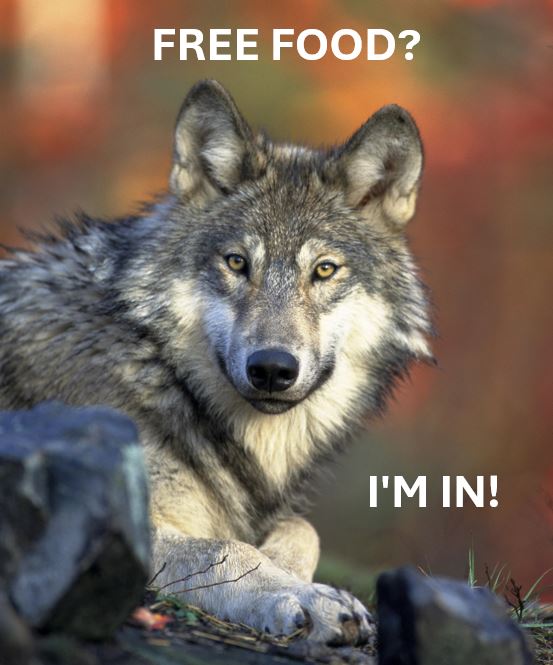
Eventually, the prey could have ceased to be merely a resource to compete for and instead acted as a glue between the two groups, increasing the motivation of both toward the common goal of bringing down the prey.
So, if the concept of ecological niche is brought into play, the multiple encounters between the ancestors of dogs and humans begin to make more sense. Moreover, it seems unlikely that wolves and adult humans willingly approached one another; however, in the context of a group, redirecting aggression toward a third common objective rather than toward each other could have influenced the final relationship, increasing the time passed together as well.
Additionally, wolf pups, like human pups, exhibit characteristics that inspire tenderness and stimulate maternal behaviors. This could have been an additional factor that facilitated the domestication of meek individuals among ancient dogs.
What is certain is that, also in the case of canine domestication, ecological and evolutionary factors have played a role. The interactions between individuals, and between different population, are filled with multifactorial links, testifying to the relationship between humans and Nature that is rooted in our evolutionary history. All this echoes the ancient ecological interaction that shaped humans and dogs’ co-evolutionary path.
 Talking Ecology