Have you ever observed what happens when a new product appears on the market?
Take as an example a hypothetical new type of herbal tea. Let’s say a company starts producing tropical fruit herbal teas, suitable for the summer period: it is quite likely that when they first appear in supermarkets they will be placed in a separate display, more or less in the area of herbal teas and infusions but detached from the main aisle of the shelves, where the other “classic” herbal teas, already on the market, lie. Well, if these tropical fruit herbal teas start to become very fashionable, you will see them colonize an “official” place on the main shelf, while the sales of such a new tropical tea rise rapidly. Soon, similar herbal teas produced by other firms may appear. The shelves become populated of several types of herbal teas with similar taste, although it is very likely that the company which first commercialized the tropical fruit tea will dominate the market as well as the shelves.
…OK, I know that market dynamics depend on a great many other factors, and I admit that I am not an expert in economic field, so I hope economists will forgive me for taking this example to explain an ecological concept I love to talk about when I give lectures: the difference between founder-controlled and dominance-controlled ecological successions.
Ecological succession refers to the process by which a community of organisms changes over time after a disturbance or the creation of a new habitat. We usually distinguish between a primary succession and a secondary succession, and we know that it all starts with some pioneer species that after a while, by changing the environment itself, give way to other species, until a climax community appear with its enviable stability and resilience.
However, this is only the end of the story: there are a lot of interesting concepts to delve on when it comes to ecological succession processes.
First and foremost, although it may seem obvious, it is always good to remember that the moment when an ecological succession begins is the result of an incredible series of combinations. For a species to arrive at a site and start colonizing it, it must first be able to reach that location. Subsequently, the species should find at least some suitable conditions for its survival at the site, along with a sufficient quantity of resources or at least an acceptable flow of resources. Lastly, the site must not have already been colonized by other organisms that could harm the arriving species, preventing it from surviving and thriving.
Stated this way, the possibility of colonizing and initiating an ecological succession might seem like winning a jackpot! However, the ecological dynamics of successions really occur through such an incredible combination of various factors, in a complexity that is probably indescribable.
To continue, we need to distinguish between the type of the communities that initiate or lead the succession.
A founder-controlled community is a community where the initial species that colonize a disturbed or newly created habitat play a significant role in shaping the trajectory of succession. The term “founder” refers to the first organisms that establish themselves in the newly available space. In this case, we admit the existence of several species with comparable competitiveness and the same level of ability to conquer the new habitat, but the one species that become dominant in the community is the one that arrive first on the site.
The process of founder-controlled succession is then influenced by the dispersal abilities and life-history traits of the pioneering species. These early colonizers, in fact, modify the environment in ways that either facilitate or hinder the establishment of other species, therefore later-arriving species may be limited by the modifications made by the initial colonizers.
Dominance-controlled communities, on the other hand, are characterized by dominant species that often have traits that enable them to outcompete other species for resources or withstand disturbances better. In this case, among all the species that are able to conquer the new habitat, there is one that is – or becomes – dominant due to higher competitiveness.
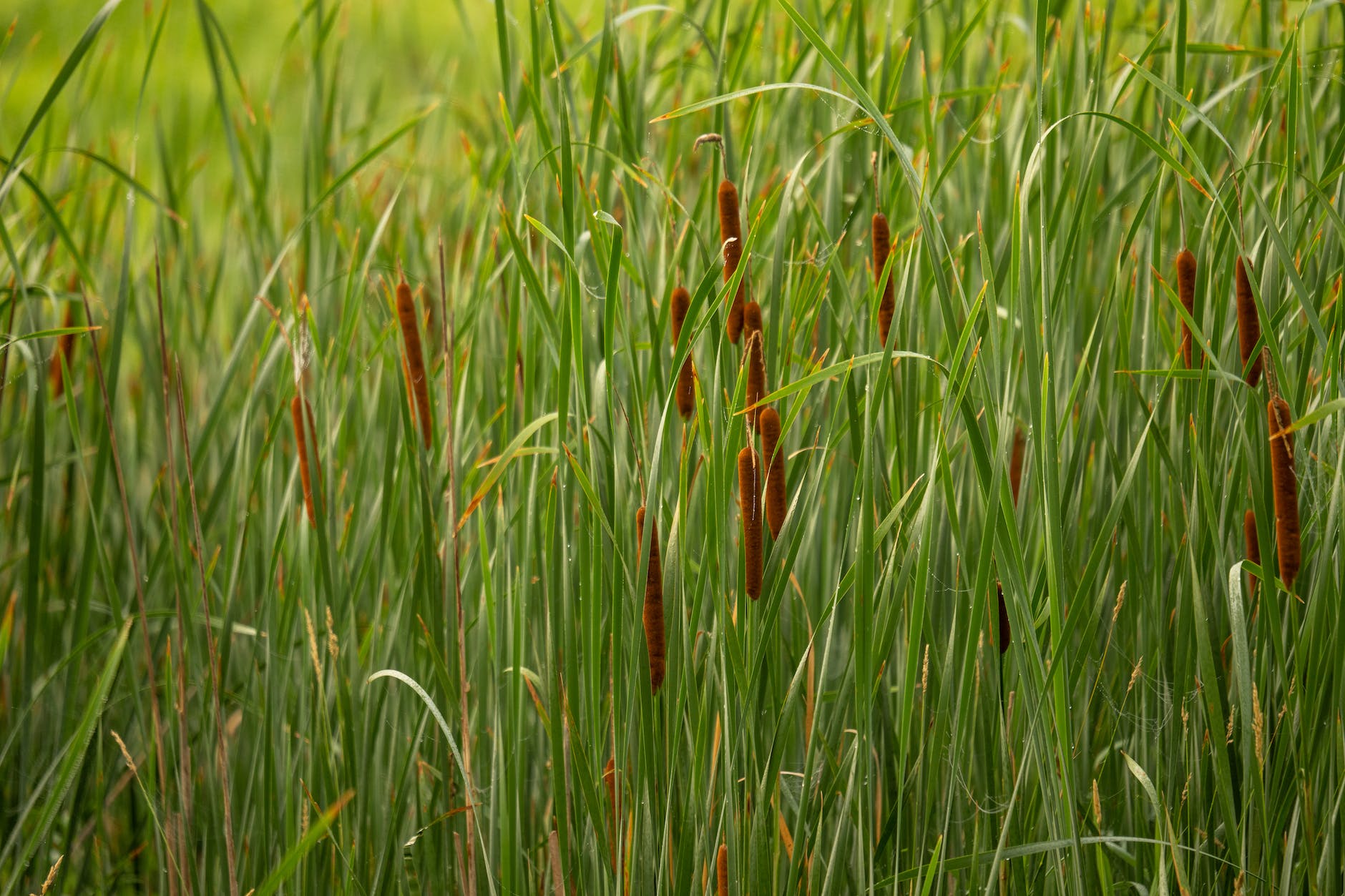
An example of dominance-controlled succession can be observed in some wetland ecosystems. Species like cattails (Typha spp.) can rapidly colonize and dominate disturbed wetland areas due to their efficient seed dispersal and ability to tolerate a wide range of environmental conditions. As cattails dominate the habitat, they may create dense stands that limit light availability and space for other plant species, creating a self-reinforcing cycle of dominance.
Of course, founder-controlled and dominance-controlled communities are not mutually exclusive categories. Both types of community can operate simultaneously, and the specific outcomes will depend on the interactions between the initial colonizers, the environment, and the abilities of later-arriving species to establish themselves.
Overall, the interplay of founder-controlled and dominance-controlled succession adds to the complexity and diversity of ecological communities as they evolve over time. Different ecosystems around the world exhibit various successional patterns, making ecological succession an intriguing ecological concept to study…
…especially while drinking a good cup of tropical fruit herbal tea, perhaps!
 Talking Ecology