Yesterday, in the late afternoon, as I returned home after a day of fruitful work, I couldn’t help but feel a deep sense of gratitude. The day had not yet exhausted its good fortune, for I discovered my children working in perfect harmony. Armed with shovels and various gardening tools, they had joyful smiles on their faces. As their mother, it was a delightful sight to see my mischievous duo put aside the usual disagreements and squabbles, typical of siblings, and engage in genuine collaboration.
But as an ecologist, this momentary glimpse of teamwork triggers a familiar concept—an ecological phenomenon known as mutualism. Indeed, it takes me just a second to get inspired because of a sentence that my daughter told to her brother: “What a wonderful job! See, I will do this and you will do that, and we will have advantages per two in the same amount of time!”.
This reminds me of mutualism, an ecological interaction where a couple of organism do different actions at the same time, sharing resources or exchanging actions from which they can get reciprocal advantages.
Mutualistic relationships are characterized by the exchange of resources, such as food, shelter, protection, or pollination, which enhance the survival, reproduction, or growth of the interacting species. Therefore, mutualism occurs when two or more species engage in a mutually beneficial partnership, where each partner provides resources or services that enhance the fitness and success of the other. This cooperative interaction can be seen as an ecological version of “scratch my back and I’ll scratch yours,” where both parties gain from their association. Mutualism plays a pivotal role in ecological networks, contributing to biodiversity, ecosystem stability, and the overall resilience of ecosystems.
Among all the ecological interactions, I think that mutualism stands out as a fascinating form of symbiotic relationship.
Mutualism can take various forms, from obligate mutualisms, where partners are entirely dependent on each other, to facultative mutualisms, where species can survive independently but benefit from the association.
These partnerships can occur between species from different taxonomic groups, including plants and pollinators, ants and plants, or even bacteria and hosts.
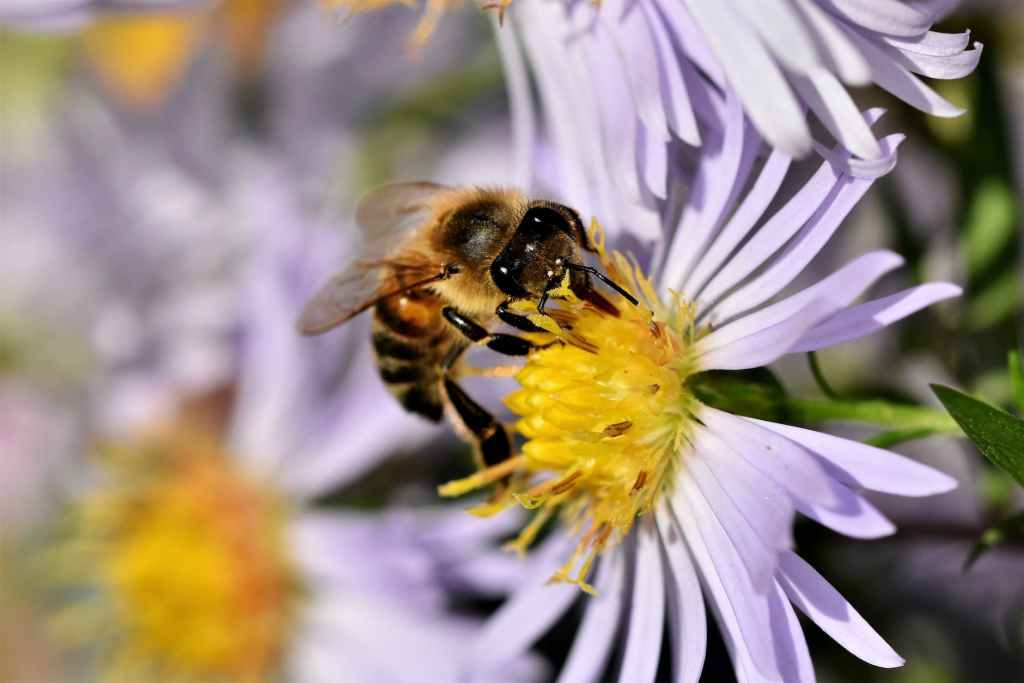
One of the most iconic examples of mutualism is the relationship between flowering plants and their pollinators. Bees, birds, butterflies, and other pollinators visit flowers to feed on nectar or pollen. In the process, they inadvertently transfer pollen from one flower to another, facilitating plant reproduction. The plants benefit from increased pollination, leading to enhanced seed production and genetic diversity, while the pollinators gain access to nutritious resources.
Another intriguing mutualistic interaction occurs between ants and acarids. Acarids are small arachnids often seeking shelter and protection within ant colonies, while ants benefit from the services provided by these tiny hitchhikers. In this mutually beneficial relationship, the acarids find refuge and safety within the ant nest. They reside in specific areas, such as ant brood chambers or specialized cavities, where they can access the ants’ resources and receive protection from predators. In return, the acarids offer various advantages to the ants.
One of the significant benefits the acarids provide is grooming. Ants are meticulous groomers, and they spend a considerable amount of time cleaning their bodies and removing debris and pathogens. Acarids assist in this grooming process by attaching themselves to the ants’ bodies and consuming any unwanted particles, such as fungi or mites, that may be harmful to the ants’ health. By doing so, the acarids contribute to the overall hygiene and well-being of the ant colony.
Furthermore, acarids may also feed on ant secretions or excretions, such as honeydew produced by aphids or scale insects that the ants tend and protect. This additional food source supplements the ants’ diet, providing them with extra nutrients and energy.
Mutualistic interactions are not isolated events but are embedded within complex ecological networks. These networks consist of multiple interacting species, including mutualistic partnerships, predation relationships, and competition. Within these networks, mutualism plays a critical role in connecting different species and driving the flow of resources. For example, a pollinator not only benefits a specific plant species but can also indirectly influence the abundance and distribution of other plant species through pollen transfer. This interconnectivity highlights the importance of mutualism in shaping community structure, stability, and resilience.
Of course, this is a consequence of how mutualistic interactions (and their consistency) promote coexistence and biodiversity by enabling the partitioning of resources and reducing competitive exclusion. Mutualism also contributes to ecosystem stability by enhancing nutrient cycling, seed dispersal, and pollination services. Moreover, mutualistic partnerships can enhance the resistance and resilience of ecosystems to environmental disturbances, as partners may provide support or buffering during times of stress or change.
Therefore, mutualism represents an intriguing and fundamental ecological interaction that underpins the functioning and stability of ecosystems. The symbiotic relationships formed between species through mutualism provide benefits to both partners and contribute to biodiversity, ecosystem services, and resilience. By unraveling the intricacies of mutualism within ecological networks and understanding its responses to environmental change, we can gain valuable insights into the dynamics of ecosystems and inform conservation and management strategies.
While mutualism is undoubtedly fascinating, it also presents challenges for ecological research. Understanding the mechanisms that maintain mutualistic relationships, the potential conflicts of interest between partners, and the consequences of disrupted mutualisms are ongoing areas of investigation. Moreover, the impacts of global change, such as habitat loss, climate change, and species invasions, on mutualistic interactions warrant further attention.
In the coming years, interdisciplinary approaches combining field observations, experimental studies, molecular techniques, and mathematical modeling will shed light on the intricacies of mutualism. Exploring mutualistic interactions within the context of ecological networks, unraveling the drivers and consequences of mutualism disruption, and identifying the thresholds for the collapse of mutualistic partnerships are crucial directions for future research.
 Talking Ecology